Content collections, already typed
Zod schemas on every collection, so a missing frontmatter field fails the build instead of the page.

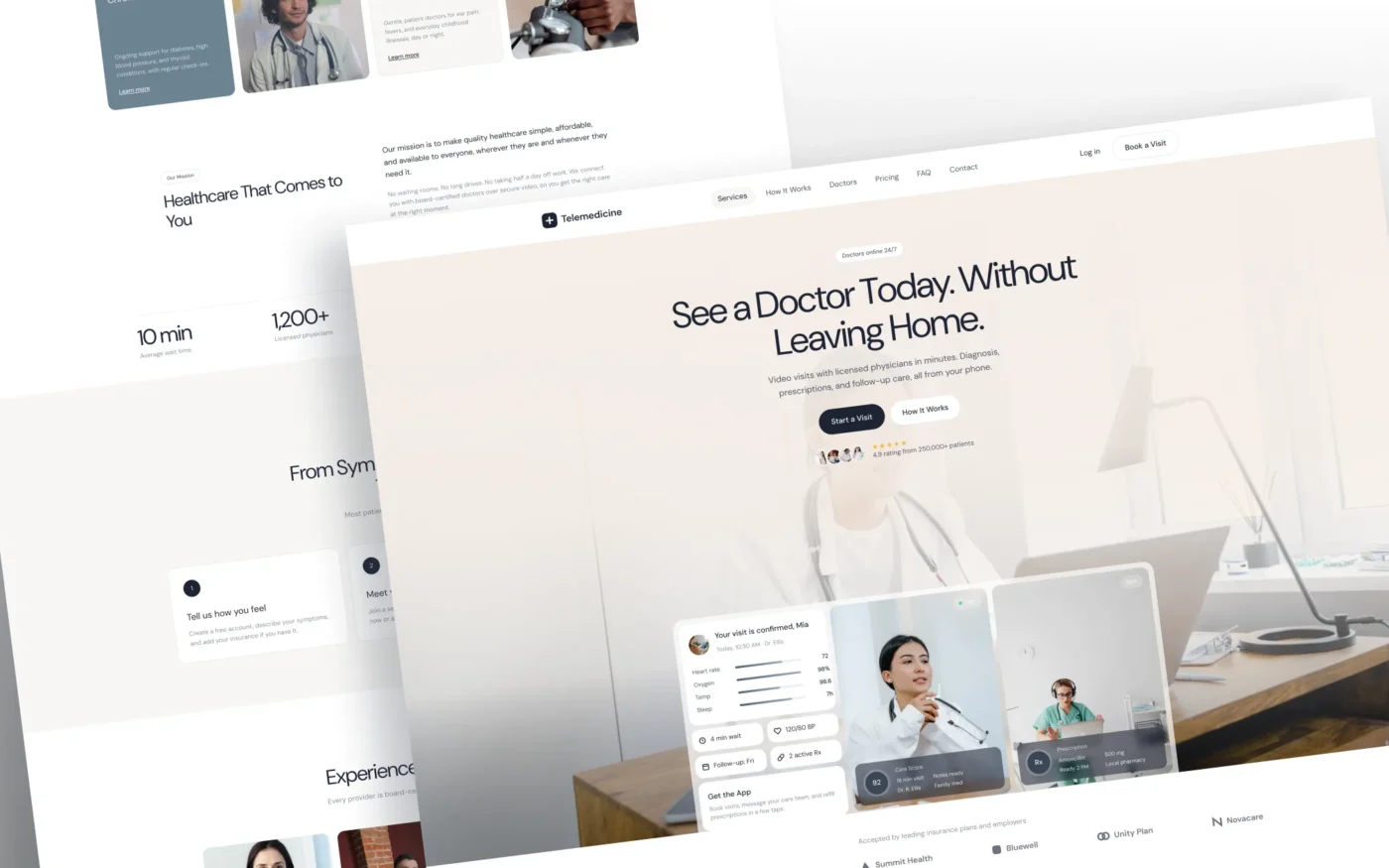
Pages from the Telemedicine Astro Theme demo.
Every page is written, styled and wired to a content collection. Delete what you don't need instead of building what's missing.
The Telemedicine Astro Theme is a premium healthcare website template for online doctor platforms, virtual clinics and digital health startups. Built by VelixaThemes with Astro, TypeScript and plain CSS, it gives you a complete, fast and accessible telehealth website. It is ready to customize and deploy in minutes.
Most medical templates give you one landing page. This one ships a full website system: a polished homepage, more than 15 inner pages, dynamic service and doctor profiles, a multi-step appointment booking interface, a blog and a patient dashboard. Everything feels like a modern healthcare SaaS product, not a generic clinic template.
The hero opens with a clear promise, “See a Doctor Today. Without Leaving Home.”, next to primary and secondary calls to action and a 4.9-star patient rating. Below it, a realistic patient-app dashboard shows vitals, a live video visit, a care score and a sent prescription. It works as a product preview and as an instant trust signal.
The homepage then walks visitors through every step of the decision:
The Telemedicine Astro Theme includes ready-made pages for About, Services, How It Works, Doctors, Pricing, Patient Stories, FAQ, Contact, Blog, Privacy Policy, Terms of Service and a custom 404. Each inner page has its own layout, so visitors never feel they are scrolling through copies of the homepage.
The booking page guides patients through six steps: choose care, pick a clinician, select a date and time, enter patient details, add insurance and confirm. A live summary panel updates with every choice, and clinicians matching the chosen service are suggested automatically. Each step validates input with clear, accessible error messages.
The booking flow is a frontend interface. Connect it to your own scheduling system or API to take real appointments. The README explains exactly where.
Offer a complete product experience with login and sign-up screens plus five dashboard templates: overview, appointments, secure messages, prescriptions and profile. They are ideal for showcasing your app or as a starting point for your own patient portal.
The Telemedicine Astro Theme is a static Astro site with no heavy UI framework. Pages ship as plain HTML with very little JavaScript, which keeps them fast on mobile networks.
Healthcare websites must work for everyone. The theme uses semantic HTML, a skip link, visible keyboard focus and an accessible mobile menu. Form fields have labels and announced errors, and text colours meet WCAG AA contrast. Layouts were tested from 320 px phones to wide desktop screens, with no horizontal scrolling. Animations respect reduced-motion settings.
You don’t need to edit dozens of files. Site name, contact details, calls to action, and app links live in one config file. Services, doctors, pricing, testimonials, FAQs and navigation each have their own typed data file. Brand colours, spacing and radii are CSS variables in one tokens file. Blog posts are simple Markdown files.
The theme also works in a subfolder. Set your URL once, and every link, image and feed adapts automatically.
Run npm install and npm run build, then upload the static output to Vercel, Netlify, Cloudflare Pages, GitHub Pages, Hostinger or any shared host. No database or server is required.
All healthcare content, doctors, prices and statistics in the demo are fictional. Review and replace them with accurate information before launch.
Launch a credible, fast and patient-friendly telehealth website with the Telemedicine Astro Theme. Get the theme or explore the live demo.
Audited on every release. If a component costs more than it's worth, it doesn't ship.
Across the wider web, 71% of real Astro sites pass Core Web Vitals, against 48% on WordPress and 35% on Next.js — HTTP Archive and the Chrome UX Report, published by the Astro team. We build on that head start rather than spending it.
No runtime, no license server, no wrapper package. The source is yours the moment you buy it.
Zod schemas on every collection, so a missing frontmatter field fails the build instead of the page.
A build-time loader for content you can prerender, plus a live loader when the data has to be fresh on request.
Colour, radius, spacing and type scale live in a single stylesheet. Six values is usually the whole job.
Client islands hydrate on visible or on idle; server islands defer personalised parts. Everything else is HTML that never wakes up.
Locale routing, hreflang tags and mirrored layouts for right-to-left languages are wired before you start.
Static by default, on-demand rendering where you ask for it. Actions and sessions are set up for the contact form.
It is a premium Astro website template for telemedicine platforms, online doctors, virtual clinics and digital health companies. It includes a homepage, more than 15 inner pages, service and doctor templates, appointment booking UI, blog and patient dashboard screens.
Basic web skills are enough. Most content lives in simple TypeScript data files and Markdown blog posts. Change text, prices, doctors or services without touching page layouts. The README walks through every step.
No. The six-step booking flow is a frontend interface with validation and a live summary. To accept real appointments, connect it to your scheduling system or API. The README shows exactly where to add that connection.
Yes. Paste your Formspree, Web3Forms, Netlify Forms or custom API endpoint into the site config. Until then, the form runs in demo mode and sends nothing.
Yes. Every page has a unique title, meta description, canonical URL, Open Graph and Twitter tags. It also includes medical structured data, an XML sitemap, RSS feed and robots.txt. Static HTML and optimized images keep pages fast.
Yes. Layouts were tested from 320 px phones to wide desktops with no horizontal scrolling. The theme uses semantic HTML, keyboard-friendly navigation, labelled forms and WCAG AA colour contrast.
Any static host: Vercel, Netlify, Cloudflare Pages, GitHub Pages, Hostinger or standard shared hosting. Build once and upload the output folder. No database or server is needed.
Yes. Brand colours and spacing are CSS variables in one tokens file. The font is a single import, and the logo is one small component. Site name, contact details and links live in one config file.
No. It is built with Astro, TypeScript, plain CSS and lightweight vanilla JavaScript. Swiper powers the sliders and loads only on pages that use them.
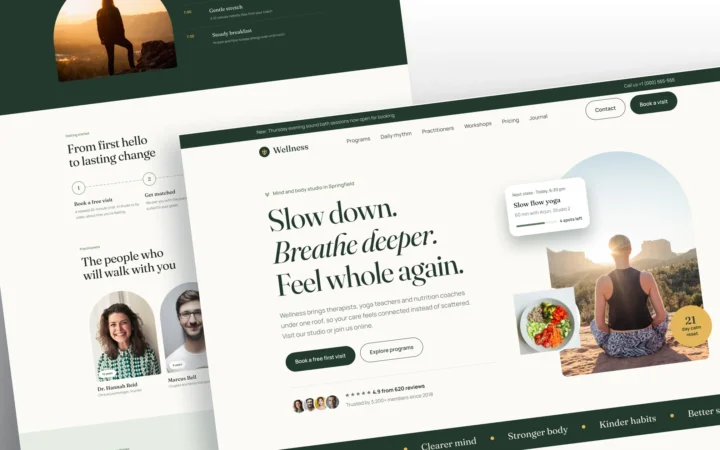
A twelve-page corporate site for consulting and professional services firms.
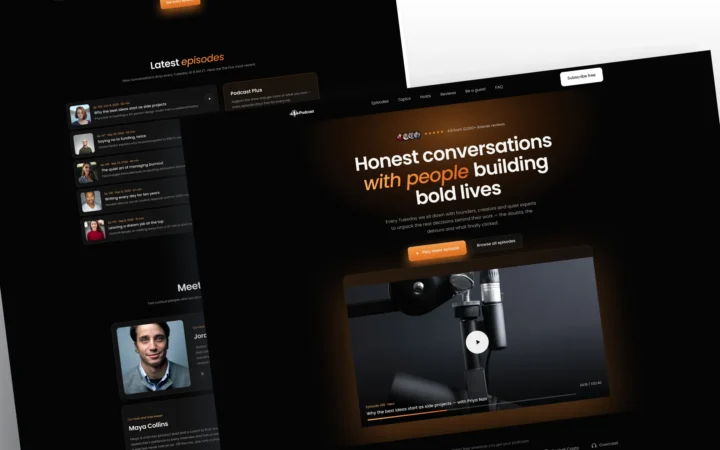
A twelve-page corporate site for consulting and professional services firms.
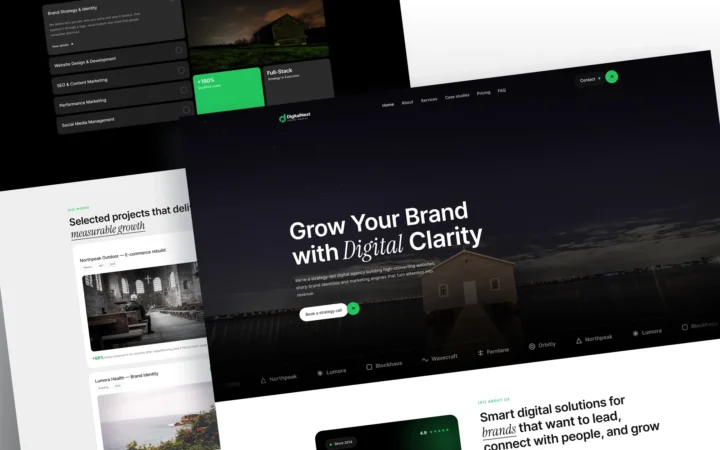
A twelve-page corporate site for consulting and professional services firms.