Content collections, already typed
Zod schemas on every collection, so a missing frontmatter field fails the build instead of the page.

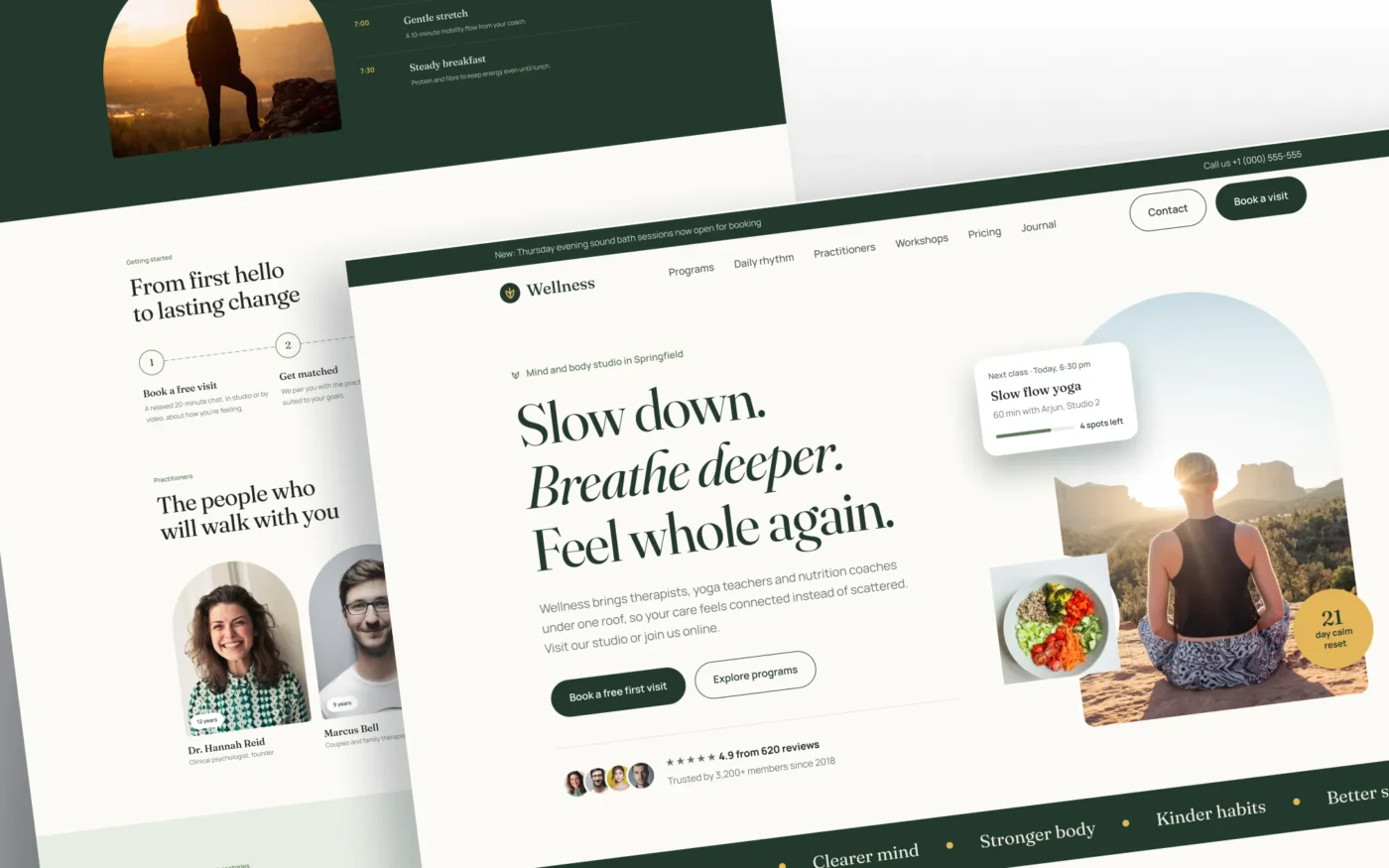
Pages from the Wellness Astro Theme demo.
Every page is written, styled and wired to a content collection. Delete what you don't need instead of building what's missing.
Wellness Astro Theme is a fast, accessible Astro template built for wellness centres, yoga and meditation studios, therapy practices, nutrition coaches, spas and retreat centres. It pairs a calm, editorial design with a complete set of ready-made pages, so you can launch a professional wellness website without building it from scratch.
The design feels natural and trustworthy. Deep forest greens, warm sand and paper tones, and a sunlit gold accent set a relaxed mood. Elegant Fraunces headings sit beside clean Manrope body text. Arch-shaped photos, rounded cards and soft hover effects give every page an organic, premium character.
This is a full wellness website template, not a single landing page. Out of the box, you get:
Eight demo programs, four practitioners, six workshops, nine journal articles and eleven FAQs show exactly how each page works. Replace the content with your own and the layout stays polished.
The Wellness Astro Theme runs on Astro 7 and outputs a static site. Pages are pre-rendered HTML, so they load quickly and are easy for search engines to crawl. There is no React, Vue or other front-end framework. The only client-side library is Swiper, and it loads only on pages that show a slider.
Images are optimised at build time into responsive WebP files with explicit sizes, which prevents layout shift. Fonts are self-hosted, so the site makes no Google Fonts requests. The marquee, hero reveal and hover effects use lightweight CSS animation.
Search engine optimisation is built in:
An inclusive wellness website should welcome everyone. This Astro wellness theme includes a skip link, clear landmarks and visible focus states. The mobile menu supports the keyboard and the Escape key. The Daily Rhythm tabs follow the WAI-ARIA tabs pattern, and the FAQ uses native accordions. Text colours meet WCAG AA contrast, and animations calm down when visitors prefer reduced motion.
Testimonials, practitioners, workshops and journal posts can be shown in responsive Swiper carousels. Program pages include an image gallery with thumbnails. Every slider supports touch, swipe and keyboard control. Autoplay comes with a pause button and switches off for visitors who prefer less motion. You can change slides per view, breakpoints, navigation, pagination and autoplay in one place.
You don’t need to dig through templates to update your business details. Your studio name, address, phone, email, opening hours, booking link, social links and SEO defaults all live in one configuration file. Programs, practitioners, workshops, pricing, testimonials and FAQs are simple TypeScript data files. Journal posts are Markdown files.
Colours and fonts are design tokens, so a rebrand takes minutes. The booking buttons can point to your contact form or to an external scheduler such as Calendly, Acuity or Mindbody.
The contact and newsletter forms are fully styled and accessible. Connect them to Formspree, Netlify Forms, Web3Forms or your own API by adding an endpoint. Until then, the forms clearly tell visitors that nothing was sent, so no message is ever lost silently.
Because it builds to static files, you can host the Wellness Astro Theme on Vercel, Netlify, Cloudflare Pages, GitHub Pages or any standard hosting plan such as Hostinger. Sub-folder hosting is supported too. The included README walks you through installation, customisation, adding content and deployment.
The demo photos are included to show how the layouts work. Replace them with your own images before you launch.
Get the Wellness Astro Theme today and give your studio a website that feels as calm and caring as the experience you offer.
Audited on every release. If a component costs more than it's worth, it doesn't ship.
Across the wider web, 71% of real Astro sites pass Core Web Vitals, against 48% on WordPress and 35% on Next.js — HTTP Archive and the Chrome UX Report, published by the Astro team. We build on that head start rather than spending it.
No runtime, no license server, no wrapper package. The source is yours the moment you buy it.
Zod schemas on every collection, so a missing frontmatter field fails the build instead of the page.
A build-time loader for content you can prerender, plus a live loader when the data has to be fresh on request.
Colour, radius, spacing and type scale live in a single stylesheet. Six values is usually the whole job.
Client islands hydrate on visible or on idle; server islands defer personalised parts. Everything else is HTML that never wakes up.
Locale routing, hreflang tags and mirrored layouts for right-to-left languages are wired before you start.
Static by default, on-demand rendering where you ask for it. Actions and sessions are set up for the contact form.
The Wellness Astro Theme is a premium Astro template for wellness businesses: yoga and meditation studios, therapists, nutrition coaches, spas and holistic wellness centres. It includes a homepage, about, programs, practitioners, workshops, pricing, journal, FAQ, contact and legal pages.
Basic familiarity with editing text files helps. Business details live in one config file, and content such as programs, practitioners, and pricing lives in simple data files. Journal posts are written in Markdown. The README explains every step.
It is built on Astro 7 and requires Node.js 22.12 or newer. It outputs a static site with no React, Vue or Svelte.
Yes. Run npm run build and upload the dist folder to any web host, including Hostinger. It also deploys to Vercel, Netlify, Cloudflare Pages and GitHub Pages, and supports hosting in a sub-folder.
The theme includes booking buttons, a booking request form and workshop "reserve a spot" links. It does not process bookings or payments itself. Point the buttons to your scheduler, such as Calendly, Acuity or Mindbody, or connect the form to a form service.
Add an endpoint from Formspree, Web3Forms or your own API, or switch on Netlify Forms. Setup takes a few minutes and is documented in the README.
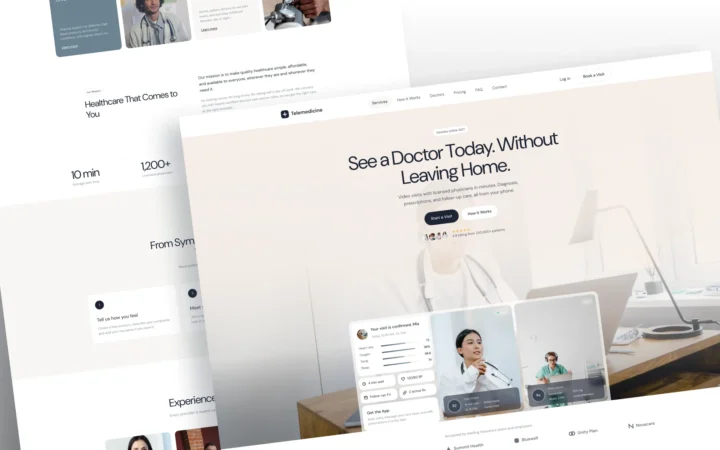
A twelve-page corporate site for consulting and professional services firms.
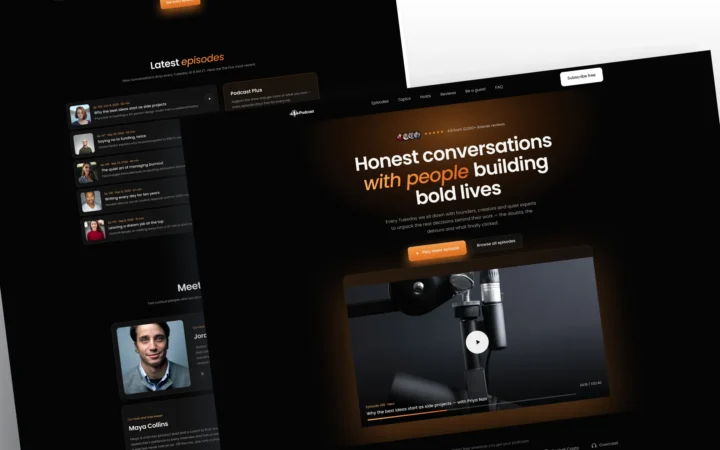
A twelve-page corporate site for consulting and professional services firms.
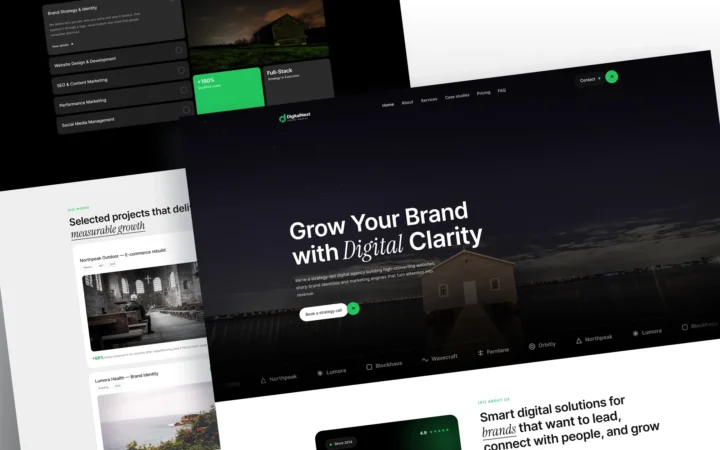
A twelve-page corporate site for consulting and professional services firms.