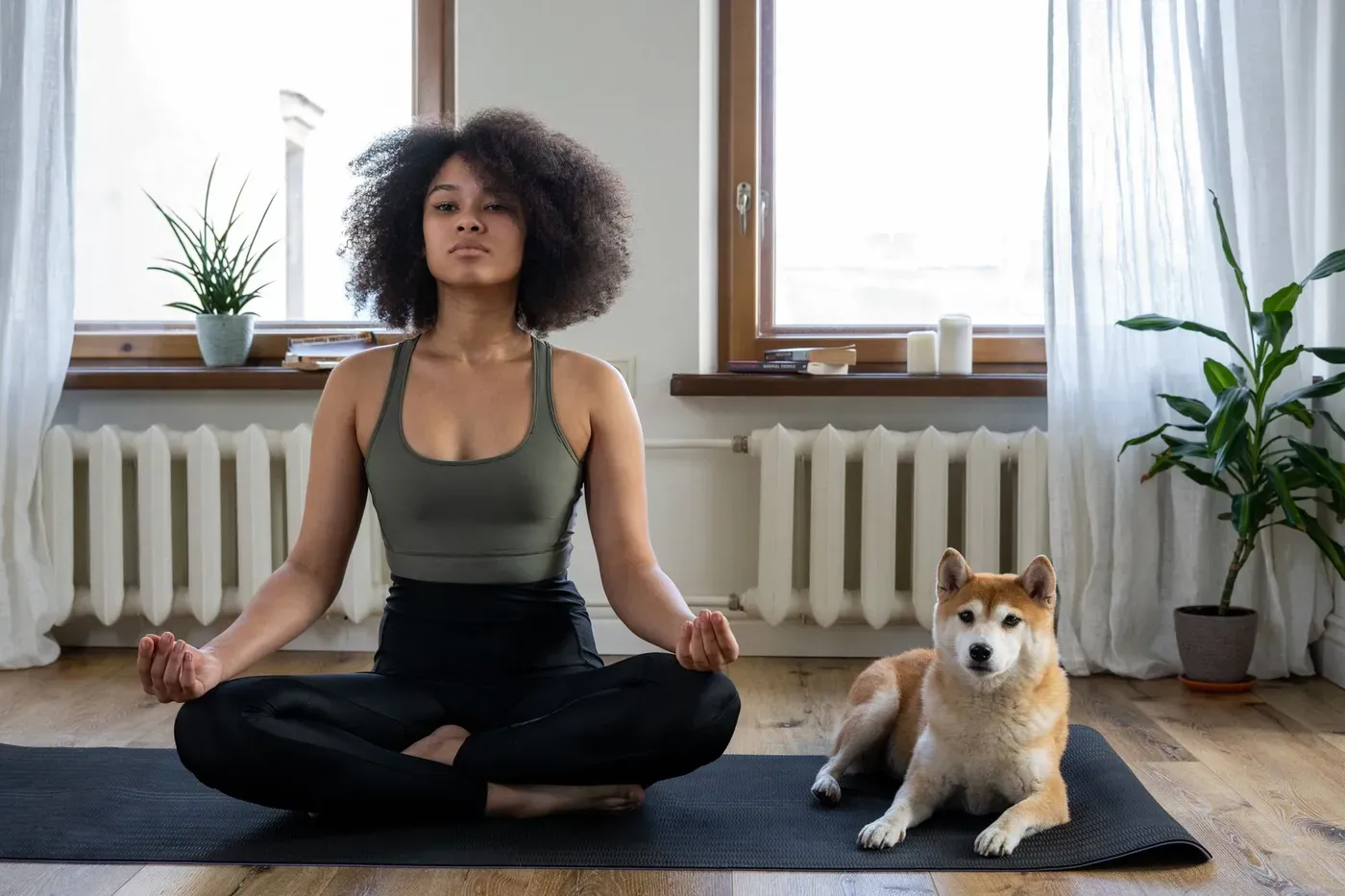
Why your mind races at night, and three ways to slow it
Dr. Hannah Reid explains what's behind late-night overthinking — and three gentle techniques to try tonight.
By Dr. Hannah Reid ·Breathwork doesn't require special equipment or an hour on a cushion. Three simple practices to weave into ordinary days.
 Arjun Nair 1 min read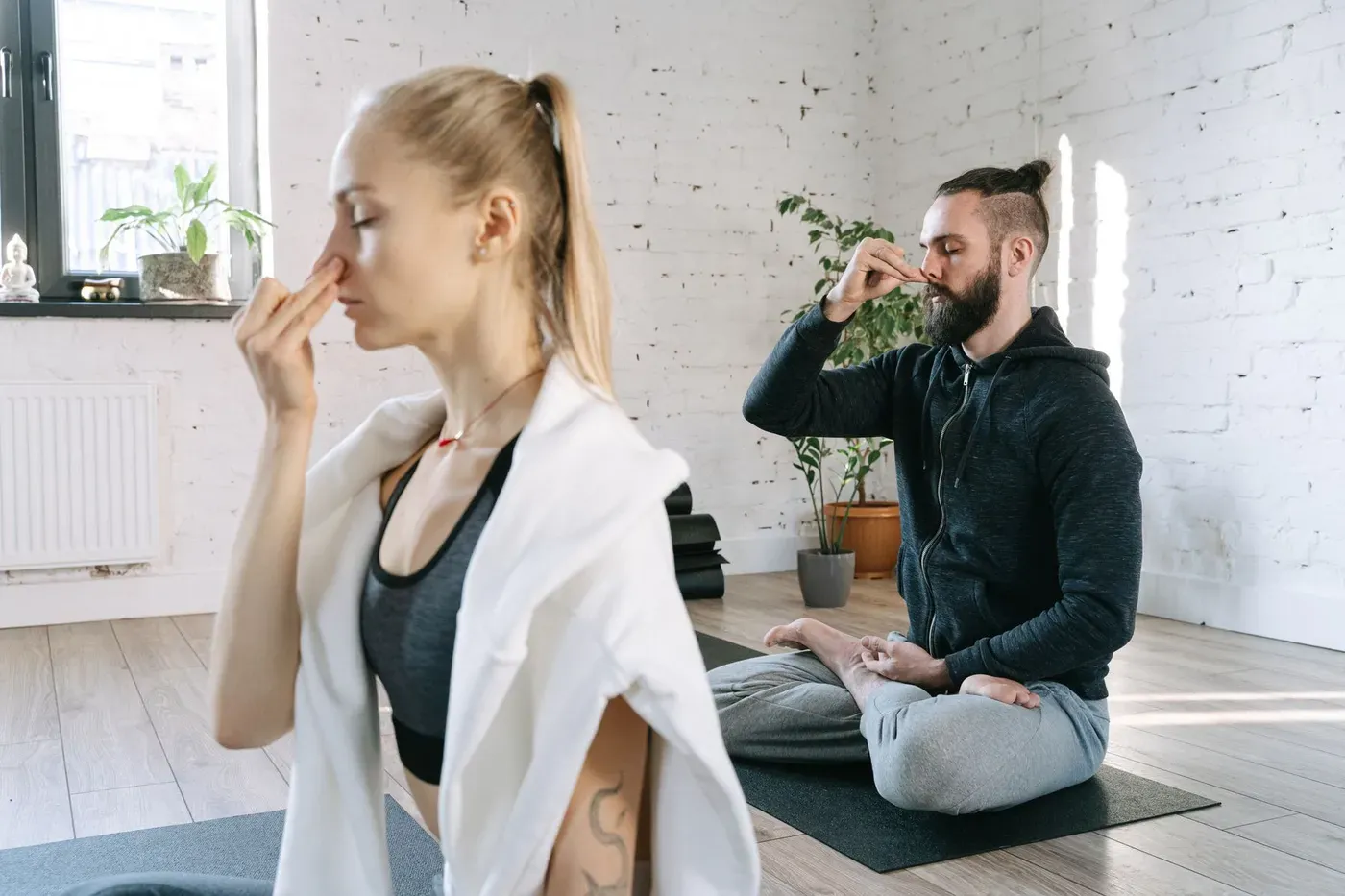
Breathing is something we do around 20,000 times a day without thinking. Breathwork simply means paying attention to some of those breaths — and occasionally changing their rhythm on purpose.
Many people notice that slowing their breathing helps them feel more settled, especially in tense moments. Breathwork is also portable: you can practise on the bus, at your desk or in a queue, and nobody needs to know.
Breathe in and out through your nose, a little slower than usual. That’s it. Try it for two minutes when you sit down at your desk.
Breathe in for four counts, hold for four, out for four, hold for four. Repeat four rounds. Useful before a meeting or a difficult conversation.
Breathe in for four counts and out for six. Many people find this one especially helpful in the evening.
Breathwork should feel comfortable. If you feel dizzy or uncomfortable, return to normal breathing. If you’re pregnant, or have a heart or respiratory condition, check with your doctor before trying new breathing techniques — and let your teacher know in class.
Dr. Hannah Reid explains what's behind late-night overthinking — and three gentle techniques to try tonight.
By Dr. Hannah Reid ·You don't need a 5 am wake-up and a two-hour ritual. Here's how to build a morning that feels steadier, one small step at a time.
By Dr. Hannah Reid ·Leila Ahmadi on simple lunch changes that can help keep your energy steadier through the afternoon.
By Leila Ahmadi ·